Home › Technologies › Radar Rain Gauges
Radar Rain Gauges with Custom Loggers
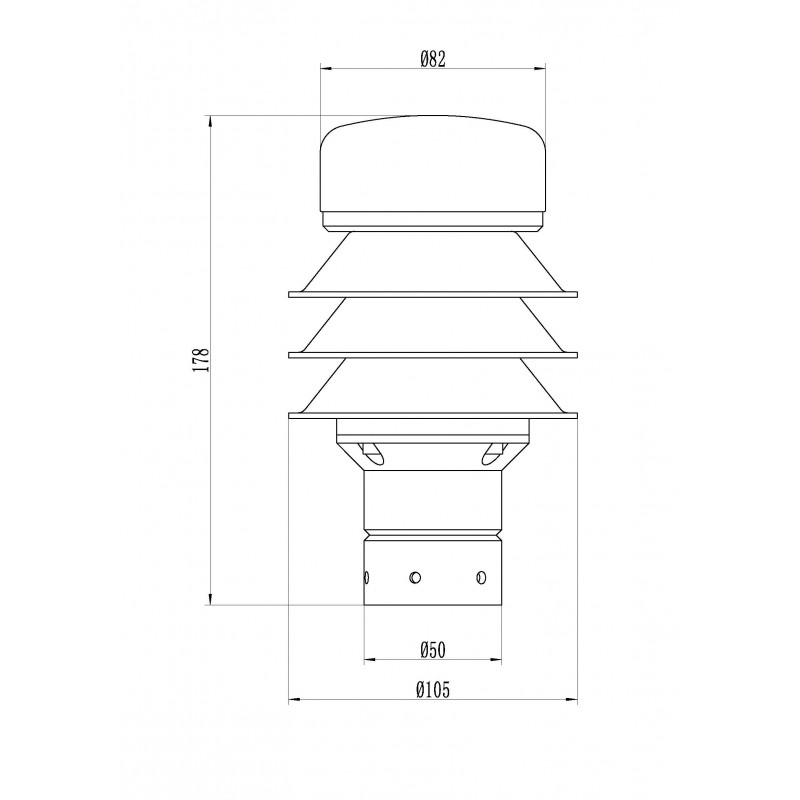
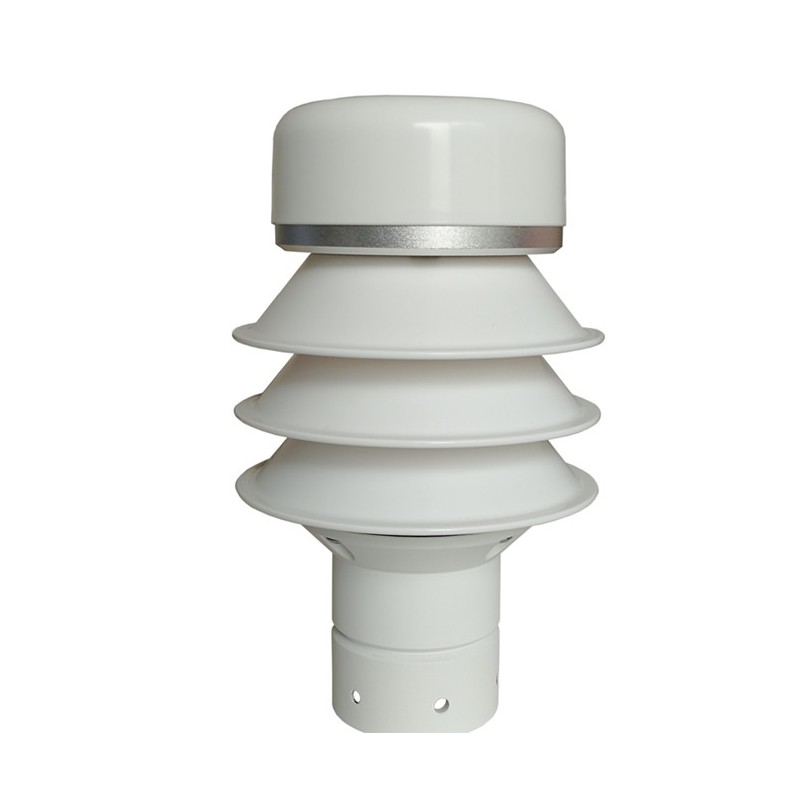
Radar precipitation sensors paired with EED custom dataloggers for high resolution rainfall measurement. Because measurement is non-contact, there is no funnel to block and no tipping bucket to wear or under-catch in heavy rain, which gives research grade data with far less maintenance in remote sites.
How it works
A Doppler radar measures the size and fall speed of individual raindrops as they pass through the beam. From the drop size distribution the sensor derives rainfall rate and accumulation, and can distinguish rain, drizzle and hail. The custom logger handles real time signal processing, stores data locally and sends it on over the site telemetry, so nothing is lost if the link drops.
Key features
| [ Sensing ] | Non-contact Doppler radar measurement of drop size and fall speed, with no moving parts. |
| [ Data ] | Rainfall rate, accumulation and precipitation type at high time resolution. |
| [ Logger ] | Custom datalogger with real time processing, local storage and configurable sampling. |
| [ Interface ] | Standard SDI-12 digital interface, also available in RS-485 (Modbus RTU), so the sensor drops straight onto Campbell Scientific CR300 or CR1000 series loggers, our custom IoT loggers, or any SDI-12 capable logger on a shared three-wire bus. |
| [ Telemetry ] | Multi protocol telemetry (cellular, LoRaWAN or radio) to a central dashboard. |
| [ Maintenance ] | No funnel blockage or tipping bucket wear, so far fewer site visits. |
SDI-12 interface
The radar sensor communicates over SDI-12 (Serial Data Interface at 1200 baud), the standard used across hydrology and environmental monitoring for smart sensors. SDI-12 keeps wiring and integration simple:
| [ Three wires ] | A single shared bus carries power, ground and one data line, so cabling and connectors stay minimal even over long runs. |
| [ Addressable ] | Each sensor has its own address (0-9, a-z, A-Z), so many sensors share one bus and one logger port without extra hardware. |
| [ Digital values ] | Rainfall rate, accumulation and precipitation type are returned as calibrated engineering units, with no analogue scaling or noise to manage. |
| [ Low power ] | Sensors sleep between measurements and wake on command, which suits battery and solar powered remote sites. |
| [ Plug and play ] | Works with Campbell Scientific and any SDI-12 compliant logger; our custom loggers speak SDI-12 natively, so commissioning is fast. |
Connects to research grade and IoT loggers
The sensor ships with a standard SDI-12 digital interface, and is also available in RS-485 (Modbus RTU). It connects straight to research grade dataloggers such as the Campbell Scientific CR300 series or CR1000 series, or to our own custom IoT loggers over SDI-12, so it fits both established weather networks and new low-power deployments without custom wiring.
Custom mounting bracket
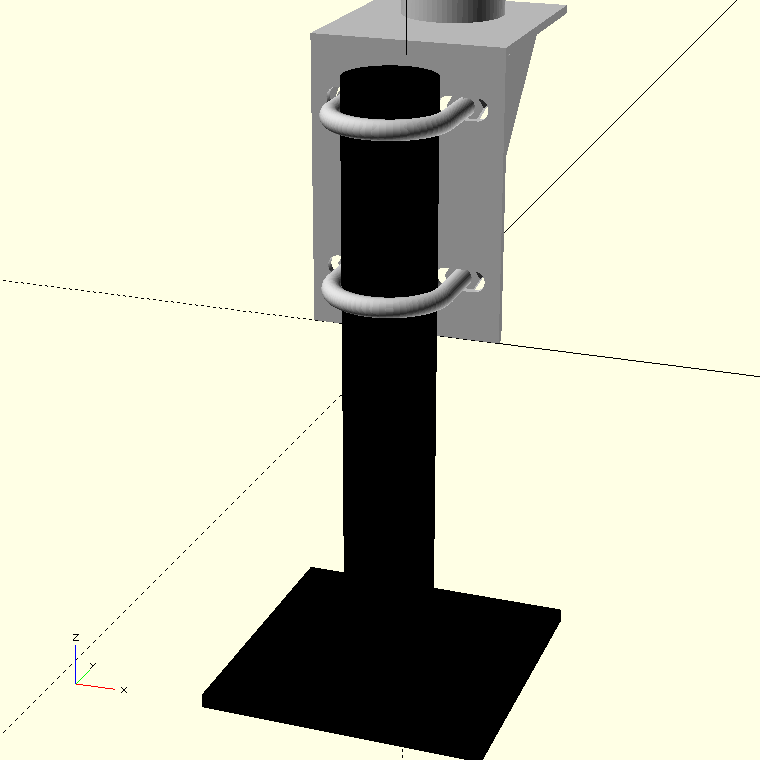
We custom manufacture the mounting brackets for our radar rain gauges in house. Each bracket locates the sensor precisely and clamps to a standard mast with a pair of stainless U-bolts, so the gauge sits level and secure in the field. The parametric design lets us match the exact sensor and pole size for every installation.
Where tipping buckets struggle
The tipping bucket rain gauge is the long-standing workhorse of rainfall measurement: simple, low cost and well understood. It does, however, have known weak points that a radar sensor is not exposed to:
| [ Blockage ] | The collecting funnel clogs with leaves, dust, insects and bird debris, so rain is missed until someone cleans it. |
| [ Heavy rain ] | At high intensity the bucket cannot tip fast enough and water is lost during each tip, so totals are under-read in the storms that matter most. |
| [ Light rain ] | Drizzle can evaporate from the funnel before it ever tips a bucket, and rain below one tip increment is not recorded. |
| [ Snow and hail ] | Frozen precipitation needs a heater to melt it first, which draws power and still measures poorly. |
| [ Moving parts ] | The pivot and bucket wear, stick and drift out of calibration, and need regular cleaning and re-checking. |
| [ Resolution ] | Rainfall is recorded in whole tip steps, which coarsens the timing and rate of an event. |
How radar complements the tipping bucket
A radar sensor measures precipitation without a funnel or moving parts, so it sidesteps most of the problems above and adds high time resolution and precipitation typing. Rather than simply replacing the tipping bucket, it works well alongside one: the bucket remains a trusted, low cost reference, and the two instruments cross-check each other so a network gains both redundancy and quality control. Many sites keep a tipping bucket for continuity and add a radar sensor for accuracy in heavy rain, snow and hail.
| Attribute | Tipping bucket gauge | Radar rainfall sensor |
|---|---|---|
| Measurement principle | Mechanical: water tips a calibrated bucket | Radar: measures drop size and fall speed, non-contact |
| Moving parts | Yes, pivot and bucket that wear | None |
| Blockage risk | Funnel clogs with debris, leaves and insects | No funnel; unaffected by surface debris, insect-proof outlet |
| Heavy rain | Under-reads as water is lost between tips | Handles high rainfall rates without loss |
| Light rain | Can miss drizzle to evaporation and tip resolution | Detects onset and light rain quickly |
| Snow and hail | Needs a heater and still measures poorly | Distinguishes rain, snow and hail, no heater needed |
| Time resolution | Coarse, in whole tip increments | Near-continuous, sub-second sampling |
| Maintenance | Regular cleaning and re-calibration | Largely maintenance-free |
| Power | Very low (passive switch) | Low, a few watts |
| Best role | Proven, low cost reference and long record continuity | High-resolution measurement, event timing and precipitation type |
Applications
| Hydrology | Catchment and streamflow studies where accurate high intensity rainfall matters. |
|---|---|
| Weather networks | Automatic weather stations needing low-maintenance, high resolution rainfall. |
| Research | Precipitation microphysics and drop size distribution studies. |
Deploy a monitoring system
We size, supply, install and support the system for your site. Contact us for more information and to discuss deploying radar rainfall measurement →
Related: More technologies we build →
EED Data Systems · Home · WindRose V1 · WxLog V1 · Stratus · Contact
Copyright 2026 EED Data Systems. All rights reserved. Validate results before regulatory or safety critical use.